Skip to content
AS Andrea Santoro
45.07°N 7.69°E · Turin
Sheet 00 — HomeRev. 2026.10

Andrea
Santoro

I’m an applied mathematician interested in using mathematics and data to understand how complex real-world systems work. I develop methods to uncover higher-order, time-varying interactions in multivariate signals — from the brain to financial markets — and use network science to explore systems as diverse as sperm whales and world cuisines.

Hi there! Portrait of Andrea Santoro
Fig. 0 — the author, Turin
Fig. 1 — whiteboardchalk on slate
3 K 2-simplex = 3-way interaction a hole: β₁ = 1 1 x₁ x₂ x₃ Ω < 0 2 synergistic triplet 4 persistence barcode H₀ H₁ persistent H₁ cycle filtration ε Ω = TC − DTC O-information field notes · ▶ listen CLICK! 1+1+3
Abstract

I develop computational methods to infer structured, time-varying interactions from high-dimensional multivariate data, combining statistical inference, network theory and computational topology. Neuroscience is my main application area, and the same methods extend to financial and other complex systems; with network science I also study sperm whale behaviour and world cuisines.

Role
MSCA Postdoctoral Fellow
Host
ISI Foundation, Turin · NPLab
Project
temporalHOI · Project CETI
Expedition journal Camp · Turin

Entry · October 2026

Camp is at the ISI Foundation, in Turin. Pairs never told us the whole story, so we keep listening for the triplets: the synergy hidden in brain and market signals.

Part of the expedition sails with Project CETI, charting the social networks of sperm whales, one coda at a time.

Supplies: an MSCA fellowship, temporalHOI. Morale: high. Reviewer 2: still at large.

To whoever finds this, the trail continues in the papers →— A. S.

§1

Log

All entries →
October 2026
New preprint

Higher-order topology uncovers the multidimensional dynamics of naturalistic emotion

Read ↗
August 2026
preprint

Sperm whale foraging combines persistent search with flexible prey-capture tactics

Read ↗
August 2026
workshop

All-CETI Meeting in Dominica

July 2026
paper

New paper in Nature Communications: Charting higher-order models of brain function

Read ↗
§3

Selected publications

All publications →
[25]
preprint · bioRxiv · 2026

Higher-order topology uncovers the multidimensional dynamics of naturalistic emotion

L. Zaffina, M. Diano, F. Petruso, M. G. Preti, E. Amico, E. Morgenroth, G. Petri, D. Van De Ville, P. Vuilleumier, A. Santoro

[24]
preprint · bioRxiv · 2026

Sperm whale foraging combines persistent search with flexible prey-capture tactics

L. Zaffina*, C. Monti*, S. Poetto, M. Lucas, H. J. Machado Borges, R. Deshpande, P. Tønnesen, D. F. Gruber, S. Gero, A. Santoro*, G. Petri*

[23]
journal · Nature Communications · 2026

Charting higher-order models of brain function beyond pairwise interactions

A. Santoro*, M. Neri*, S. Poetto, D. Orsenigo, M. Diano, M. Gatica, G. Petri

[11]
journal · Nature Physics · 2023

Higher-order organization of multivariate time series

A. Santoro, F. Battiston, G. Petri, E. Amico

To be continued…
§4

About

Full CV →

I am a mathematician with a strong interest in applied sciences. My research focuses on complex networks, time series analysis, neuroscience, and information theory, with a particular emphasis on higher-order models and their application to large-scale systems. Currently, my work involves developing topological approaches to infer higher-order dependencies in multivariate time series, with applications in brain data and economics. I am also part of Project CETI (Cetacean Translation Initiative), which is an ambitious interdisciplinary endeavor aiming to decode the communication of sperm whales.

I am an MSCA Postdoctoral Researcher at the ISI Foundation in Turin, supported by the Marie Curie project "temporalHOI". I work within the NPLab under the mentorship of Prof. Giovanni Petri, and in collaboration with Dr. Fabrizio De Vico Fallani at INRIA, Paris. I received my PhD in Applied Mathematics from the Complex Systems and Networks Group at Queen Mary University of London, where I worked under the supervision of Vincenzo Nicosia and Lucas Lacasa.

Previously, I held position as a Researcher at CENTAI and worked as a Postdoctoral Researcher at the Neuro-X Institute at EPFL (Geneva), under the guidance of Dr. Enrico Amico within the MIPlab group of Prof. Dimitri Van De Ville. I have also held research positions at The Alan Turing Institute (London) and served as a Research Assistant at Queen Mary University of London.

My interest in complex networks began in 2014 during my visits to the Complex Systems and Networks group at Queen Mary University, under the supervision of Vito Latora and Vincenzo Nicosia. I obtained a degree in Mathematics and Master in Applied Mathematics both from the University of Catania. I was also enrolled at the Scuola Superiore di Catania, an institution that gives talented students from the University of Catania complementary and advanced classes and encourages them to start research projects before graduation. My master's thesis and early research were supervised by Giuseppe Nicosia. You can find more about me here.
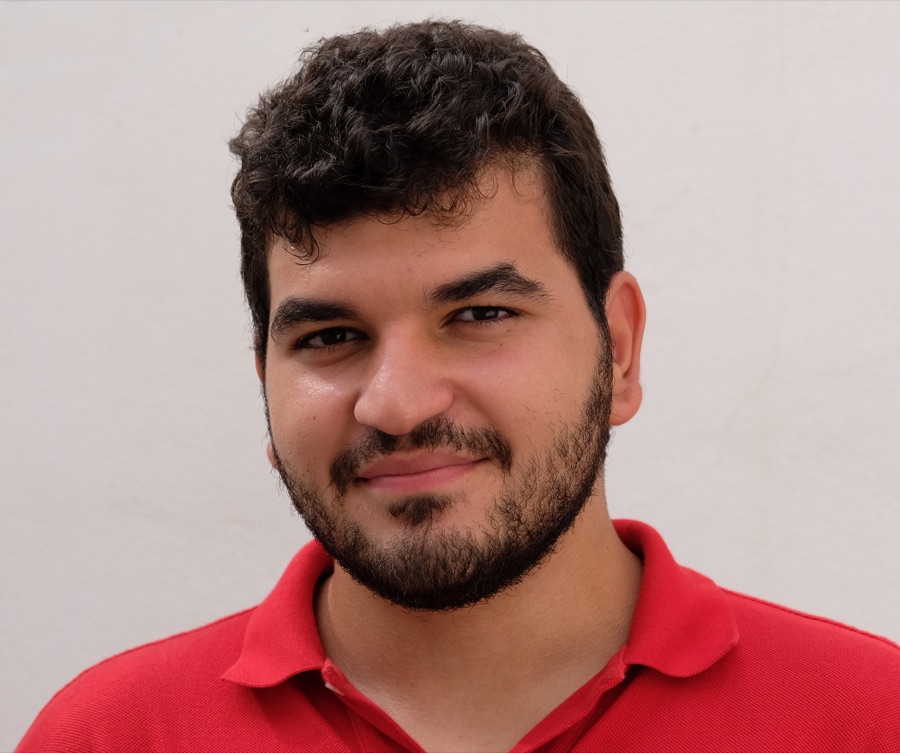
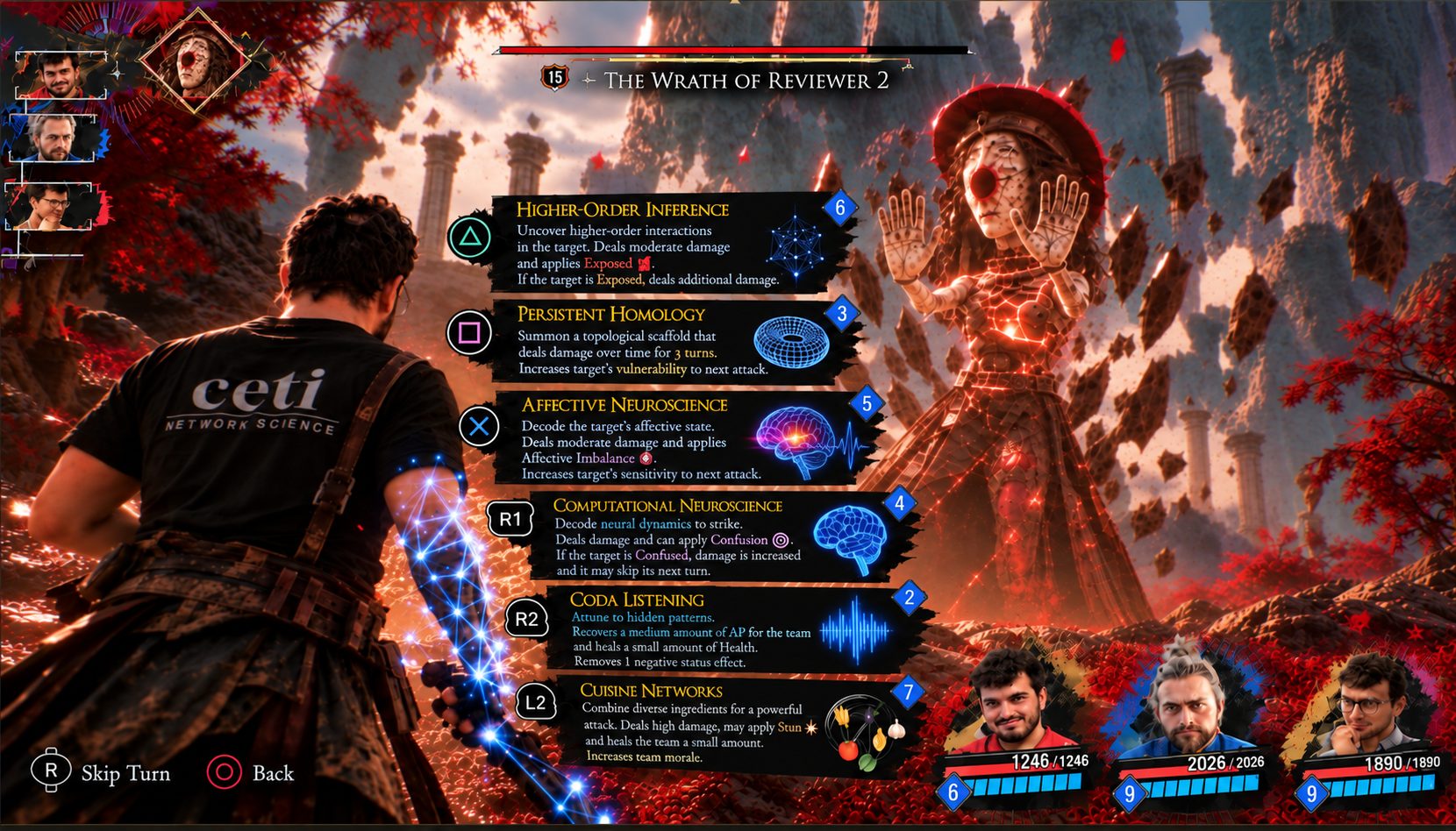
Fig. 4Turin
Low-poly view of Turin with the Mole Antonelliana and the Alps
Turin — the Mole Antonelliana and the Alps, triangulated
Trajectorydrawn as a persistence barcode
MSCA Postdoctoral Fellow · CENTAI → ISI Foundation
Researcher, Project CETI · CENTAI, Turin
Postdoctoral Researcher · Neuro-X, EPFL
Research Assistant · QMUL
Enrichment PhD Student · Alan Turing Institute
PhD, Applied Mathematics · QMUL
’16’17’18’19’20’21’22’23’24’25’26 →
TrainingPositionsNowFull CV →